
Telling them apart
Greater Amberjack vs Lesser Amberjack
Compare the eye to the head. A lesser amberjack's eye is proportionally much larger, and its body is deeper. Size will not help you: a juvenile greater amberjack and an adult lesser are the same length, which is exactly where the mistake happens.
Last updated
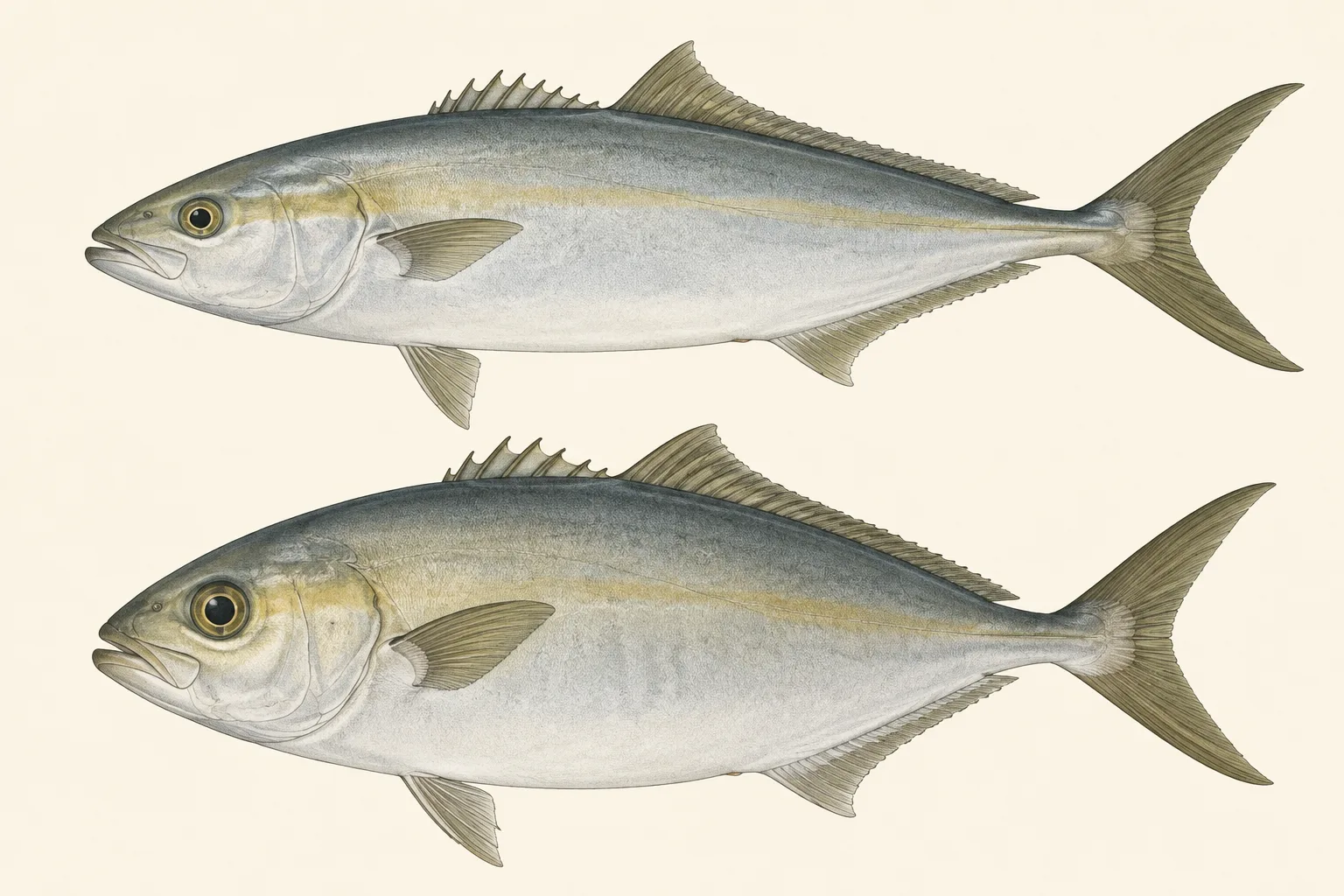
Side by side
| What to look at | Greater Amberjack | Lesser Amberjack |
|---|---|---|
| Scientific name | Seriola dumerili | Seriola fasciata |
| Eye | Ordinary for the head | Noticeably large for the head |
| Body depth | Slender | Deeper |
| Adult size | Grows very large | Rarely over about ten pounds |
| Soft dorsal lobe | Low | Low — no help here |
| Depth | Wrecks, ledges and rigs | Deeper water, usually well offshore |
Why the difference matters
This is the pairing where the identification is most likely to cost you. Greater amberjack carry a large minimum size, and a small one must go back — but a lesser amberjack at that same length is a mature fish under different rules entirely. Eye size relative to the head is the check, and it is easiest to judge with the fish flat on the deck.
Size limits, bag limits, slot limits and seasons are set by your state wildlife agency — and for many offshore and migratory species by federal regulators — and on many waters they differ from the statewide rule. They also change between seasons. Check the current regulations for the exact water you are fishing before you keep a fish — we do not republish limits here, because a number that is a season out of date is worse than no number.
Full entries
Each fish has its own page with every field mark, the rest of its look-alikes, where it holds and the conditions it feeds in: Greater Amberjack and Lesser Amberjack.
Or skip the key entirely — photograph the fish and Global Fishing League names the species, returns the scientific name with it, and files the catch with the tide, pressure, water temperature and everything else it came from.