Telling them apart
Permit vs Pompano
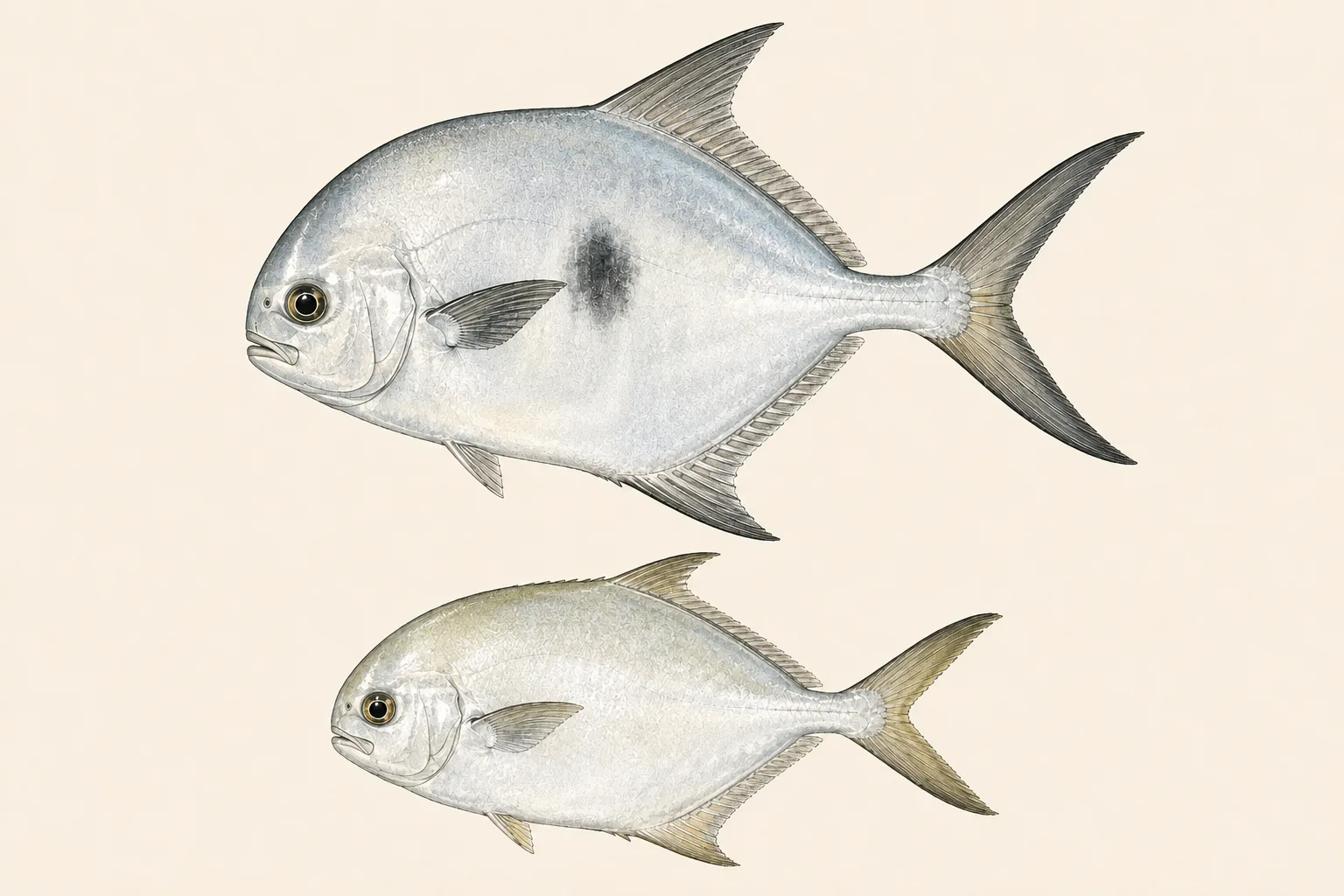
Permit are much deeper-bodied, with long sickle-shaped dorsal and anal lobes and usually a dark blotch on the flank. Florida pompano are compact, with short fin lobes, a rounded forehead and no flank blotch.
Last updated
Side by side
| What to look at | Permit | Pompano |
|---|---|---|
| Scientific name | Trachinotus falcatus | Trachinotus carolinus |
| Body depth | Very deep and disc-like, with a high forehead | Compact, shallower, with a rounded forehead |
| Fin lobes | Long and sickle-shaped, often black-tipped | Short |
| Flank blotch | Usually present | Absent |
| Size | Grows far larger | A much smaller fish |
| Where | Flats, wrecks and reefs; sight-fished tailing on crabs | The surf trough behind the first bar, on sand fleas |
Why the difference matters
Permit are managed far more tightly than pompano in Florida, with a larger minimum, a smaller bag and special protections in the Special Permit Zone, so a small permit taken for a pompano is a genuine risk in the surf. The fish also live differently: pompano run the beach with the warming water, permit sit on flats and structure.
Size limits, bag limits, slot limits and seasons are set by your state wildlife agency — and for many offshore and migratory species by federal regulators — and on many waters they differ from the statewide rule. They also change between seasons. Check the current regulations for the exact water you are fishing before you keep a fish — we do not republish limits here, because a number that is a season out of date is worse than no number.
Full entries
Each fish has its own page with every field mark, the rest of its look-alikes, where it holds and the conditions it feeds in: Permit and Pompano.
Or skip the key entirely — photograph the fish and Global Fishing League names the species, returns the scientific name with it, and files the catch with the tide, pressure, water temperature and everything else it came from.