Telling them apart
Bowfin vs Burbot
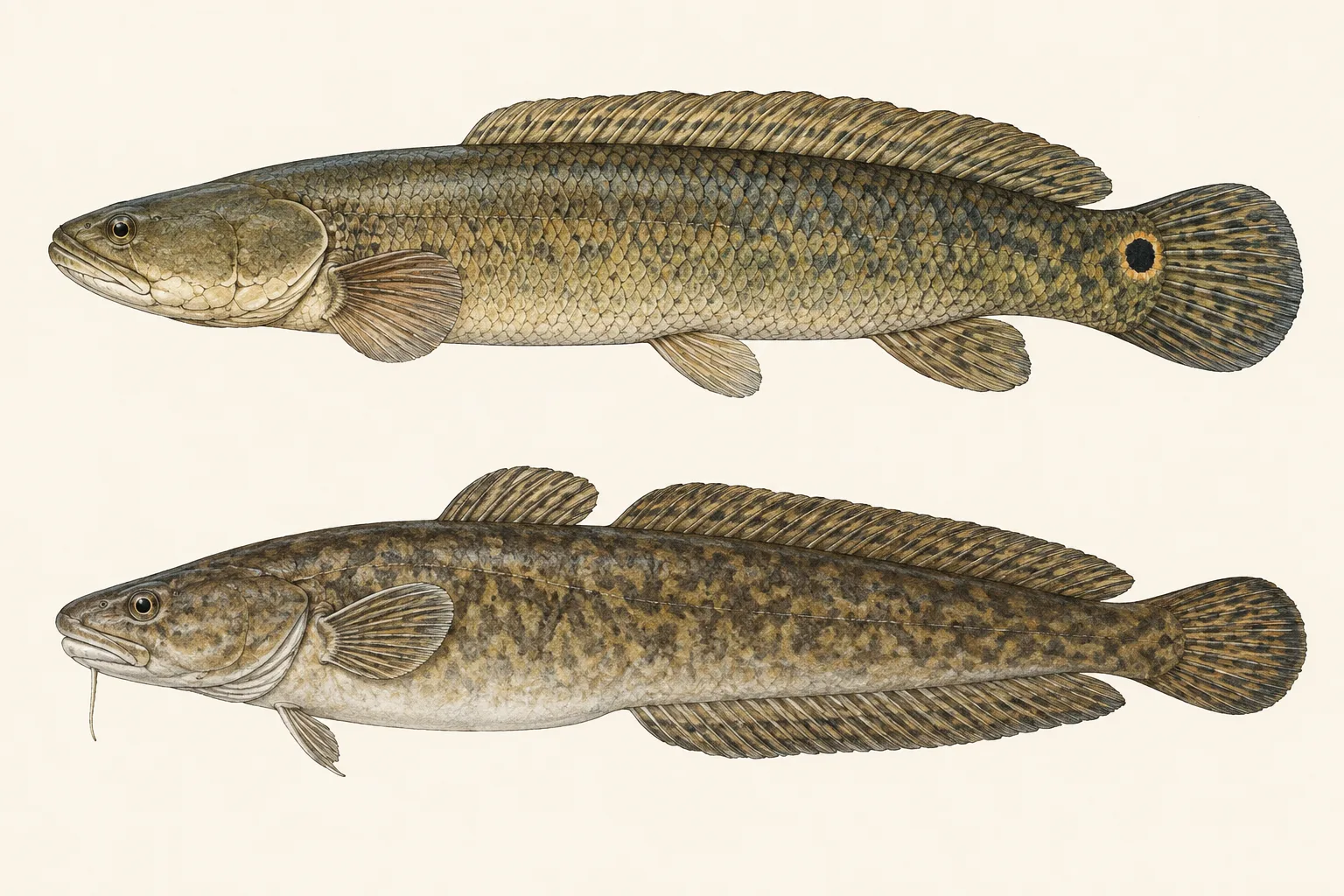
Look under the chin. A burbot has a single long barbel hanging from the centre of it. A bowfin has none, and instead has a bony gular plate between the halves of the lower jaw. Their ranges barely overlap either.
Last updated
Side by side
| What to look at | Bowfin | Burbot |
|---|---|---|
| Scientific name | Amia calva | Lota lota |
| Chin | No barbel; a bony gular plate | One long central barbel |
| Dorsal fin | One very long undulating fin over half the back | Two fins, the second long |
| Anal fin | Short | Long, matching the second dorsal |
| Tail spot | Often an orange-ringed eyespot on males | None |
| Water | Warm, weedy, swampy backwaters | Cold, deep lakes and northern rivers |
| Family | A primitive holostean, the last of its line | The only freshwater cod |
Why the difference matters
They get confused because both are long, mottled, slippery and unlike anything else an angler expects to catch. Geography does most of the work — a burbot means cold northern water and a bowfin means warm southern swamp — but the chin barbel is the check where the two ranges brush against each other.
Size limits, bag limits, slot limits and seasons are set by your state wildlife agency — and for many offshore and migratory species by federal regulators — and on many waters they differ from the statewide rule. They also change between seasons. Check the current regulations for the exact water you are fishing before you keep a fish — we do not republish limits here, because a number that is a season out of date is worse than no number.
Full entries
Each fish has its own page with every field mark, the rest of its look-alikes, where it holds and the conditions it feeds in: Bowfin and Burbot.
Or skip the key entirely — photograph the fish and Global Fishing League names the species, returns the scientific name with it, and files the catch with the tide, pressure, water temperature and everything else it came from.